Jurgen Lehl: Nature, Handwork, and a Way of Living

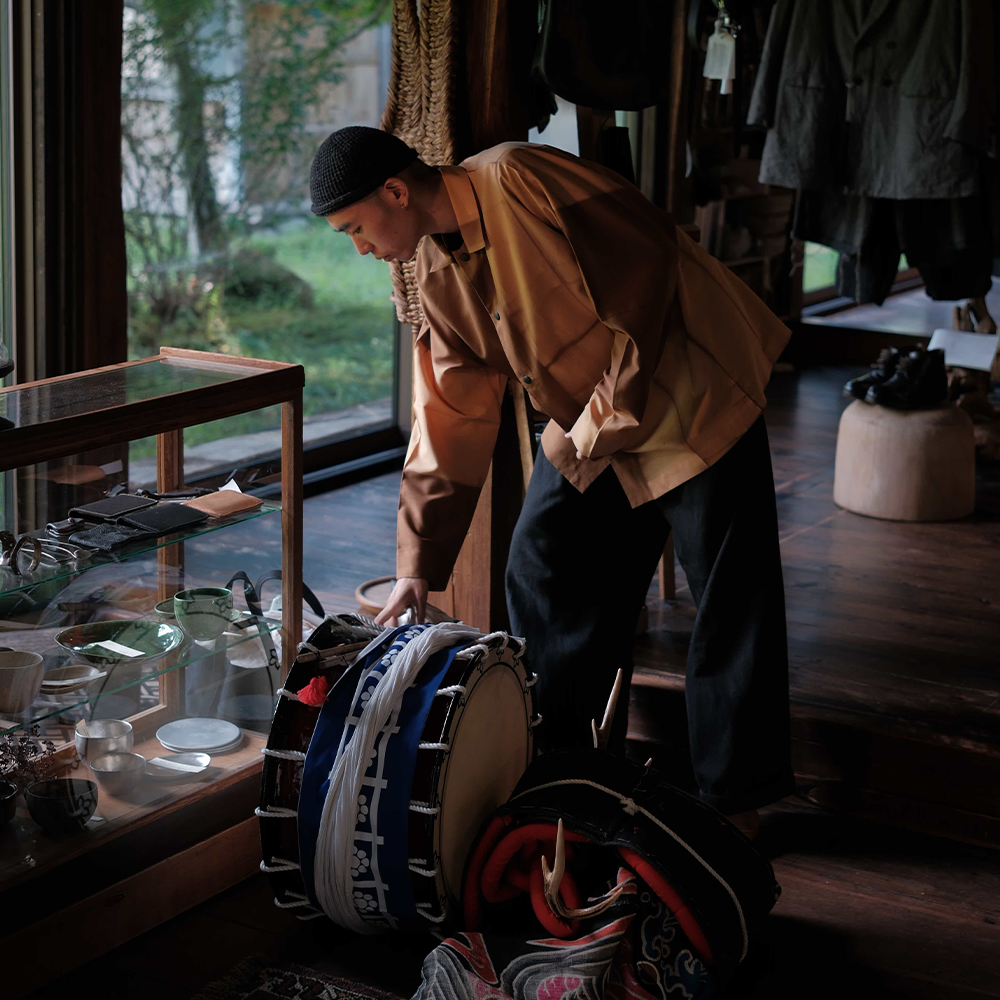
Photograph by Shuhei Tonami
“Nature has already given us beautiful things, so there is no need for extra ornament.” Guided by this respect for nature and a commitment not to use materials that cannot return to the earth, Jurgen Lehl has spent more than half a century expressing a rich way of life encompassing clothing, food, and the home through the lens of fashion.
The brand pursues making with natural materials and natural dyes, including pieces made from handspun, handwoven fabrics. It continues to offer clothing that feels comfortable and calming to wear, with the care of the handwork evident in each piece.
In this article, we would like to take our time exploring the brand’s history, philosophy, and enduring appeal.
What Is Jurgen Lehl?
Founded in Tokyo in 1972 by German designer Jurgen Lehl, the brand approaches clothing through a deep respect for nature and handwork. Its world extends from natural fabrics and handwoven textiles to tableware and the home, bringing clothing, food, and daily living together.
| Founder | Jurgen Lehl |
| Established | Tokyo, 1972 |
| Headquarters | Kiyosumi-Shirakawa, Tokyo |
| Mainly used materials | Natural materials and dyes, including handspun, handwoven khadi |
| At V.O.F | The tableware featured here is available at KUNE. Explore the clothing collection through the V.O.F online store link in this article. |
About Jurgen Lehl: The Brand’s Beginnings and History

Jurgen Lehl is a brand founded by the German designer of the same name.
His approach to making began with his career as a textile designer, distinguished by an exceptional sense of color and expressive ability. He first visited Japan in 1971. Although he originally intended to stay for only a few months, he became deeply captivated by Japanese materials and the work of its craftspeople, and decided to settle there. In his early years in Japan, he also worked on textile design with Issey Miyake, exploring the possibilities of Japanese materials and craftsmanship in greater depth.

The following year, in 1972, he established his own brand, Jurgen Lehl, in Tokyo. He displayed not only clothing but also furniture and tableware in the same space. As a forerunner of what we now readily recognize as the lifestyle shop, he proposed early on a rich way of living in which clothing, food, and the home formed a coherent whole.
Over time, his interests turned toward more deeply rooted forms of handwork and nature itself. In 2006, he launched the sister brand Babaghuri. Its distinctive name comes from the local name for agate from Ratanpur, in Gujarat in northwestern India, a stone he loved dearly.
Through this line, he expanded his world into handspinning, handweaving, and plant dyeing in India, as well as interiors, kitchenware, and other aspects of daily life. In his later years, he moved to Ishigaki Island in Okinawa, continuing to create clothing from a life surrounded by nature.
Moving at a slow pace, listening closely to what materials and handwork have to say. This consistent approach is at the heart of why the brand has been loved for more than half a century.
Jurgen Lehl’s Philosophy: Materials That Return to the Earth and Sustainability at Its Core

Central to any discussion of Jurgen Lehl is the unwavering belief in making things from materials that can return to the earth.
The foundation is a considered approach to making, with care taken to use only materials that do not pollute the environment and can eventually return to nature. The brand is said to be so thorough that even seemingly natural materials are excluded from its creative choices if scientific evidence concerning their production and disposal cannot be established. Natural materials such as shell and wood are chosen for buttons, while dyes of natural origin are also carefully selected.


Today, words such as “organic” and “sustainability” are part of everyday conversation. Yet Jurgen Lehl does not deliberately make these terms the centerpiece of its message.
For the brand, choosing yarns, adding color with natural dyes, and making clothing from materials that return to the earth are simply a matter of course: an extension of living with a sense of reverence for nature.

Photograph by Shuhei Tonami
This approach was quietly practiced long before environmental awareness became widespread. Making begins with an honest respect for nature, rather than a desire to make a statement. That ease and steady perspective can be felt in clothing stripped of excess decoration, without becoming overly self-conscious.
Jurgen Lehl’s Aesthetic Across Clothing, Food, and the Home

Jurgen Lehl’s aesthetic extended far beyond clothing, reaching into every aspect of everyday life.
“Nature has provided such beautiful things that I do not want to make unnecessary things, such as ornaments.” This way of thinking is particularly evident in the products and collections he left behind.


Take, for example, the tableware series cast from papayas and emu eggs. At first glance the forms appear uniform, yet their subtle irregularities bring something of nature into everyday life. They grew out of his distinctive belief that forms that are not too perfect belong naturally on a warm, welcoming dining table. Alongside the regular colors, seasonal colors are introduced each year. These pieces are available at KUNE.
His deep appreciation of nature’s sculptural beauty also found expression in chairs carved from a single piece of teak, stools made using yatara-ami, a traditional Japanese irregular bamboo-weaving technique, and necklaces of raw, beautiful agate gathered from around the world.


The staff cafeteria at the company’s headquarters is also well known. Sharing nourishing meals with employees, prepared to bring out the full flavor of the ingredients, embodies Jurgen Lehl’s way of living: clothing, food, and the home are understood as parts of one continuous circle.


In his later years, Jurgen Lehl collected plastic waste washed ashore and transformed it into beautiful lighting fixtures for an exhibition of collected waste, “最後のおくりもの展” (The Last Gift). A quiet protest against environmental destruction, yet never losing its aesthetic sensibility, this approach can be seen as the culmination of the respect for nature he pursued throughout his life.
Handspun and Handwoven: The Airy Comfort of Khadi

Let us now take a closer look at the fabrics to explore what makes Jurgen Lehl so compelling.
In recent years, Japan’s climate has become increasingly subtropical, resembling that of Southeast Asia, with high summer humidity and more hot, muggy days. In this climate, one fabric we would like to revisit is khadi, the handspun, handwoven Indian cloth that Jurgen Lehl has valued for many years.


Historically, Indian khadi was also a symbol of self-reliance in resistance to British machine-made textiles. Woven from irregularly handspun yarns, the cloth allows air to pass through the spaces between the threads. The variations created by handwork make it far more breathable than machine-woven fabric, keeping it from clinging to the skin even when you perspire.

An open, lightweight feel, with a natural ease that lets a refreshing breeze through. As the fabric absorbs moisture from the body, it develops a drape and falls softly along the wearer’s frame. Jurgen Lehl’s clothing is made not to emphasize the physique, but to offer protection from Japan’s summer heat and humidity, allowing the wearer to move through the day beautifully and comfortably, as if dressed in the breeze.


If you would like to learn more about the handwork behind khadi and other materials, we recommend the book “ヨーガンレールとババグーリを探しにいく” (In Search of Jurgen Lehl and Babaghuri; published in Japanese). Alongside photographs taken by Jurgen Lehl himself, it offers time to explore journeys through India and the handwork of different parts of the world in greater depth.
Japan’s Only Maison Brand: Creating with Materials and Color


At first glance, Jurgen Lehl may seem rustic and simple. In fact, its considerable strength as a Japanese fashion house lies in having its own materials development department, with the ability to work independently from selecting raw materials through dyeing and knitting. Deep relationships of trust with textile-producing regions and craftspeople, built over many years, make it possible to develop original fabrics that cannot be replicated elsewhere.


Knitwear, for example, when an idea arises, the brand is said to knit a sample in-house straight away to assess how it feels to wear. Its distinctive combinations of materials include adding a small proportion of animal fibers, such as wool or cashmere, to a fabric that would feel stiff in 100% cotton, creating a refined softness and drape.
Its colors are also drawn from, and recreated after, the collection of natural minerals and plants that Jurgen Lehl assembled during his lifetime.
Signature Jurgen Lehl Pieces: Japanese Asa Chijimi and Indian Quilting
Here, we introduce two distinctive pieces that embody Jurgen Lehl’s aesthetic, together with styling ideas. Each carries the culture and handwork of the place from which it comes.
Item 1: Asa Chijimi Jacket – Japan


Jurgen Lehl’s asa chijimi, a crinkled bast-fiber fabric, is one of its signature textiles. It uses the fabric’s natural shrinkage to create a distinctive, dimensional texture that catches the breeze and feels cool to wear. Its roots lie in traditional Japanese chijimi weaving, exemplified by Echigo Jofu and Ojiya Chijimi from Niigata. The use of highly twisted yarns to create a crinkled surface carries the wisdom of craftspeople, keeping the cloth from clinging to the skin.
▶ Jurgen Lehl J0162FJM502 — Asa Chijimi Jacket, Light Brown
Item 2: Silk, Wool, and Cotton Quilted Jacket – India


This signature jacket brings together the essence of Jurgen Lehl’s aesthetic. Its most distinctive feature is an original collar that combines the look of a jacket with its lapels turned up and a stand collar. The shoulder line has a raglan-like shape, designed with reference to vintage clothing from the 1920s. As the fabric absorbs moisture from the body, it settles naturally around the shoulders; even a firm cloth gradually softens and falls into place.


Following quilting techniques born of age-old ways of keeping warm, this piece has a silk outer fabric, a wool lining, and cotton filling, with each line of stitching worked by hand. A final fulling process gives the fabric rich depth and dimensional light and shade. From the hand stitching visible on the lining to the texture of the cloth, this special piece brings together the warmth and character of traditional Indian handwork.
▶ Silk, Wool, and Cotton Quilted Jacket JO151FJM301
A Philosophy Passed On: “Clothes Without a Name That Will Still Be Here in Ten Years”

The designer Jurgen Lehl passed away in 2014. Yet the ideas he pursued throughout his life remain firmly alive in each garment the brand makes.
During his lifetime, he is said to have often told his staff and craftspeople, “Make clothes without a name that will still be here in ten years.”
He wanted his clothes to be worn by people who choose clothing for their own sense of value, without relying on the symbols of brand names and logos, status, or appearances. New clothes that allow anyone, regardless of age or nationality, to feel naturally themselves. That was the kind of clothing he sought to create.
“Making things, and then find the people who see beauty in them.”
True to those words, Jurgen Lehl’s clothes continue to be loved over ten or twenty years, rather than within the short timescale of fashion trends.

Fabrics and clothing centered on the work of craftspeople are also like encounters that could only happen in a particular year or season. As craftspeople grow older and circumstances change, it is apparently not uncommon to hear, “We may no longer be able to make a fabric with this texture next year.” This is part of the brand’s appeal: collectors continue to be captivated by the work of a particular moment, carefully gathering and treasuring pieces over many years.

Photograph by Shuhei Tonami
Clothing created from an honest respect for nature, without relying on ornament or trends. Each piece gradually finds its place in the wearer’s life, becoming familiar over time.
We hope that you, too, will have the opportunity to experience these pieces in person. The airy lightness of khadi, the gentle crispness of asa chijimi, the beautiful curve of the distinctive collar, the warmth of shell buttons: the appeal of these materials cannot be fully conveyed in photographs, but can be felt in the store.
Because each handmade piece has its own character, and both the number of pieces and the stores carrying them are limited, we hope you will enjoy the sense of connection with a garment, including the encounter that brings you to it.
Frequently Asked Questions About Jurgen Lehl
Babaghuri is the sister brand launched by Jurgen Lehl in 2006. It focuses on handspinning, handweaving, and natural dyeing, as well as interiors, kitchenware, and other aspects of everyday life.
Khadi is an Indian handspun, handwoven cloth. The variations in its yarns allow air to pass through, giving it a light feel that helps keep it from clinging to the skin.
Asa chijimi is a crinkled bast-fiber fabric rooted in traditional Japanese weaving. Highly twisted yarns create a textured surface that catches the breeze and helps keep the cloth away from the skin.
It combines a silk outer fabric, a wool lining, and cotton filling. Each line is stitched by hand, and a final fulling process adds depth and dimensional texture.
The tableware is available at KUNE. The article describes a range of regular colors as well as seasonal colors introduced each year.
Jurgen Lehl Products and Stores
▶ Explore the Jurgen Lehl Babaghuri Men’s collection
ONLINE STORE
• VISION OF FASHION (V.O.F) (SELECT BRAND)
• VISION OF FASHION ARCHIVE (PRE-OWNED)
Instagram
• OTSU KEI (Kyoto)
• CONTEXT TOKYO (Tokyo)
• KUNE (Iwate)
• VISION OF FASHION
• ARCHIVE OF FASHION
Related Articles
• What Is YOKO SAKAMOTO? Distinctive Clothing That Ages with You Through Craftsmanship and Modern Design
• What Is GUIDI? The Italian Artisan Brand Captivating the World with Its Distinctive Approach to Leather
Clothing Buyback
With a mission to encourage a healthier relationship with clothing consumption, V.O.F sources and sells pre-owned pieces, buys clothing that is no longer worn, and undertakes upcycling projects. If you have clothing you no longer need, please feel free to get in touch. Learn more about our buyback service here.