【COLUMN】The Four Seasons of Hanamaki Minami Onsenkyo and kune — A Journey Through Season, Craft, and the Memory of the Land

Hello, I am Terui, a store manager of kune. On April 15th, kune celebrated its third anniversary. I would like to express my sincere gratitude to all of our customers for your continued support, and to this region for allowing us to do business here.
In this journal, I want to share the story behind the creation of kune and introduce the seasonal beauty of the Hanamaki Minami Onsen-kyo area where our shop is located. Writing from the perspective of someone born and raised here, I hope to help more people discover the distinct charm of both our shop and this remarkable corner of Tohoku.
About kune — Timeless Beauty, Brought into Modern Life

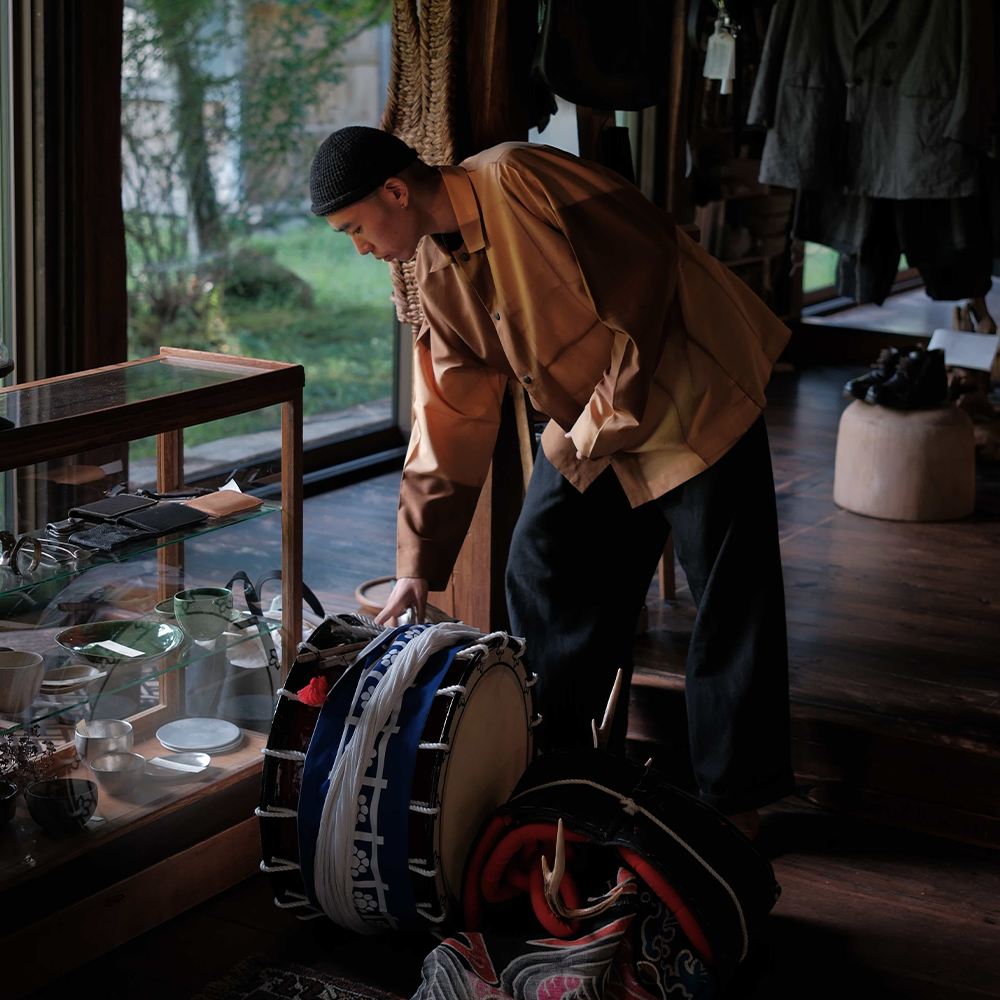
Located about a 30-minute drive from downtown Hanamaki, Iwate, nestled in a small mountain village with views of the Ou Mountain Range, you will find kune—a select shop operating out of a 100-year-old traditional farmhouse. The name “kune” comes from the Esperanto word meaning “together,” a language beloved by the legendary poet Kenji Miyazawa, who was also a native of Hanamaki.
Even as someone who grew up in Hanamaki, I initially wondered: Why build a shop here, of all places? The answer lies in the experience of the shop’s director, Kikuchi.


The Influence of JAN JAN and Pietro from JAN-JAN VAN ESSCHE
The journey began during a buying trip in Paris, where Kikuchi met the designer JAN-JAN VAN ESSCHE. Mid-conversation about their respective cultures, Kikuchi realized he lacked a deep understanding of Japan’s own traditional relationship with clothing. This realization sparked a personal exploration into Japanese aesthetics and views of nature, a journey that ultimately led him back to his roots in Tohoku, Iwate.

As he studied crafts deeply embedded in the Tohoku landscape—such as sakiori, homespun wool, sashiko embroidery, and natural dyeing—he discovered the Tohoku culture born entirely from necessity. At a time when fabric was scarce and precious, people did not waste even a single scrap. Instead, they devoted extraordinary care and effort to extending the life of every garment.

These practices were far more than traditional crafts; they represented a beautiful, pure, and practical way of life forged by the urgent need to survive a cold climate. It was a culture centered around treating clothing with deep respect and using it for as long as possible.

Planting Roots in Hanamaki
Although Kikuchi continues his work in fashion capitals—overseeing CONTEXT TOKYO in Tokyo and Otsukei in Kyoto—he chose to plant roots in Hanamaki because of this foundational spirit. The profound reverence for nature and the tender regard for objects that Tohoku has quietly cultivated over centuries align seamlessly with the vision of clothing we wish to share. It also resonates perfectly with our current pre-owned clothing business.


During his travels across Tohoku, Kikuchi came across a 100-year-old farmhouse standing steadfast and unchanged in a small mountain village within Hanamaki Minami Onsen-kyo.


Drawn to the quiet strength and beauty of architecture that had long made peace with the harsh natural world, he decided to make this space the home for his vision.

His goal was to propose a life enriched by living in harmony with the land, expressed through the garments and crafts.

The restoration aimed to return the building to its honest, original form, mirroring how it once functioned through the seasons as a working farmhouse. Within this quiet interior, historic Tohoku tools and classic Nordic furniture coexist with ease, beautifully transcending eras and borders.

Today, Kikuchi actively participates in a local sakiori weaving group, learning historical techniques directly from local practitioners. Rather than preserving these traditions as static museum pieces, our goal is to carry forward the warmth of a culture transmitted hand-to-hand through generations into modern-day life. This connection is why we continue to do business rooted firmly in this land.


Our shop curates clothing, shoes, hats, antiques, and folk crafts from regions that carry a profound story—ranging from Iwate itself to fashion capitals like Paris.


kune aspires to be a cultural crossroads. Just like the fateful conversation between Kikuchi and JAN JAN VAN ESSCHE, it is a space where rich, centuries-old cultures from different corners of the world can meet, breathe the same air, and evolve together.
Hanamaki Minami Onsen-kyo — A Hot Spring Culture Unchanged Through the Ages


Perched on the scenic slopes of the Ou Mountain Range, Hanamaki Minami Onsen-kyo is defined by strikingly vivid seasonal changes and an abundance of natural hot springs.

For hundreds of years, this area has been home to one of Japan’s most celebrated toji (hot spring cure) cultures. This tradition historically involved farmers staying for extended periods during the winter off-season to soak in the therapeutic waters and heal their bodies.
That heritage lives on today. Renowned inns like Osawa Onsen and Fujisan Ryokan still feature dedicated toji-bu (therapeutic facility), where guests can stay on a self-catering basis and prepare their own meals in shared kitchens.


The region nourishes the table as generously as it warms the body:
- Spring: Fragrant wild mountain vegetables, grown resilient and flavorful through the harsh winter cold.
- Summer: Fresh river fish caught in clear, rushing mountain streams.
- Autumn: Rich, earthy mushrooms harvested from the fertile soils of deciduous forests.
Excellent seasonal produce can be purchased at local roadside stations like Michi-no-Eki Hanamaki Seinan. It is a genuine pleasure to stop by, collect fresh ingredients, and cook your own meals during a stay. Alternatively, the multi-course meals served by the ryokans provide an entirely different, spectacular dining experience that shifts beautifully with each passing season.


Just as the local kitchens follow the natural calendar and season, the space of kune is continuously updated, ensuring our clothing and goods reflect what is in its natural prime.
Recommended Local Destinations
Fujisan Ryokan — A Secret Hot Spring with 600 Years of History

The closest hot spring to kune is Fujisan Ryokan. Boasting over 600 years of history and recognized as an official hot spring heritage site, its signature feature is a natural rock bath called the tachi-yu (standing bath)—reputed to be the deepest of its kind in Japan.
The hot spring water wells up naturally from the rock, and the gentle, deep pressure enveloping your entire body is an experience found nowhere else. The property also features a self-pour sauna, alongside an open-air bath set right beside a rushing mountain stream. Day-trip bathing is available, and many guests enjoy stopping by kune on their way to or from the hot spring.


The Walk to kune: From the ryokan, a leisurely 5-minute stroll across a distinctive red bridge brings you straight to kune. The walking path follows the soothing sounds of the stream and birdsong through the scenery of the quintessential Japanese countryside.
Osawa Onsen — A Living Piece of Old Japan
For those drawn to historic architecture and traditional ryokan, Osawa Onsen comes highly recommended.

This thatched-roof inn is over 200 years old. From spring through autumn, the large windows of its semi-open bath are flung wide open to the breeze, making it nearly impossible not to linger. Immersing yourself there feels like stepping inside a painting—a fleeting view unique to that exact moment. Visitors can feel the deep atmosphere of well-worn architecture and well-used tools.

We highly recommend that day-trip visitors enjoy lunch at the on-site restaurant, Yahagi, which is surrounded by the ambiance of historic timber architecture.
Local Specialty: Try the regional Iwate dish hitsumi teishoku. This meal features wheat dough torn by hand and simmered alongside chicken, root vegetables, and mushrooms in a savory, soy-based broth. The uneven, silky texture that comes exclusively from tearing the dough by hand (rather than cutting it like noodles) is wonderful.

The toji tradition—once exclusive to the local farming communities—endlessly reinvents itself as a medium for modern healing. Today, many travelers visit us seeking a digital detox. Quiet days spent in a simply furnished room, soaking in natural hot spring water, listening to the rhythms of nature, and tasting the food of the land provide the exact type of grounding experiences we so easily forget in modern life. Hanamaki Minami Onsen-kyo invites you to unwind and return to yourself; time moves slowly here, matching the gentle pace of a peaceful walk.


A Journey Through Tohoku Culture

Route 12, which winds directly through Hanamaki Minami Onsen-kyo, opens up a scenic trail into Akita Prefecture once the winter snow clears from mid-May onward. This route unlocks incredible cultural discoveries:
September Festivities: The energetic Hanamaki Festival fills the local streets, featuring traditional performing arts like the powerful shishi-odori (deer dance) that bring you face-to-face with a culture where humans and nature live as one.
Fermentation Craft: Visit Yamamo Miso Shoyu Jozo-moto in Yuzawa, where brewers are deeply dedicated to the heritage art of fermentation.
August Rituals: Journey to the Nishimonai Bon Odori, celebrated widely as one of Japan’s three great Bon dances.


We invite you to stop by kune as you travel through the deep, rich cultural landscape of Tohoku and Iwate.
Access & Information
kune is located approximately 3.5 hours from Tokyo Station via the Tohoku Shinkansen, making it an ideal destination for a short trip immersed in rich natural surroundings.
By Car
Approx. 20 minutes from Hanamaki Minami IC
Approx. 25 minutes from JR Hanamaki Station
Approx. 35 minutes from JR Shin-Hanamaki Station (Shinkansen)
Parking: 3–4 dedicated spaces are available near the shop signage or spaces marked with a “P” sign.


By Bus
From JR Hanamaki Station, board the Iwate Kotsu Bus bound for the “Namari Onsen” stop, followed by an approximate 10-minute walk.
Note: Please ensure you check the current timetable well in advance.
By Train
From JR Hanamaki Station: Approx. 25 minutes by car/taxi.
From JR Shin-Hanamaki Station (Tohoku Shinkansen): Approx. 35 minutes by car/taxi.
Note: This station is the most convenient if you are traveling from Tokyo.
Opening Hours
Days: Saturday, Sunday, Monday, Tuesday & Public Holidays
Hours: 10:00 – 18:00


Soak deeply in the hot springs, breathe in the fresh air of the land, and take your time exploring our clothing. We hope kune can serve as a quiet, memorable moment in your day.
There are many more local spots and unique shops we would love to recommend—far more than this journal can hold. We hope to share them with you in person, listening to your stories over the low windowsill of our engawa veranda, with the stunning borrowed scenery of the seasons framed beautifully outside.
We look forward to welcoming you.
— Terui, the store manager of kune
ONLINE STORE
・VISION OF FASHION(V.O.F)(SELECT BRAND)
・VISION OF FASHION ARCHIVE (ARCHIVE)
Instagram
・乙景(京都)
・CONTEXT TOKYO(東京)
・kune(岩手)
・VISION OF FASHION
・ARCHIVE OF FASHION
衣服買取
V.O.Fでは”衣服消費の健全化”をMISSIONに掲げ、リユース商材を仕入れて販売するほか、着られなくなった洋服の買取やアップサイクルプロジェクトに取り組んでおります。不要になりましたお洋服があれば、ぜひ一度ご相談ください。買取サービスについては コチラ から。